01
Compacted base over the soil
We excavate, compact, and grade a stone base over the loess and clay so the load spreads evenly. Leave that out and the soil heaves the slab up when it wets and freezes, then drops it again.
The heaviest flatwork most homes own, sitting on ground that freezes deep and shifts with moisture. We build the driveway for the vehicles and the St. Louis winter, with a rebar grid and an air-entrained pour, not for whoever bids lowest.
Tear-out, forms, base, reinforcement, pour, screed, broom, joints, cure. The whole job, in 3D.
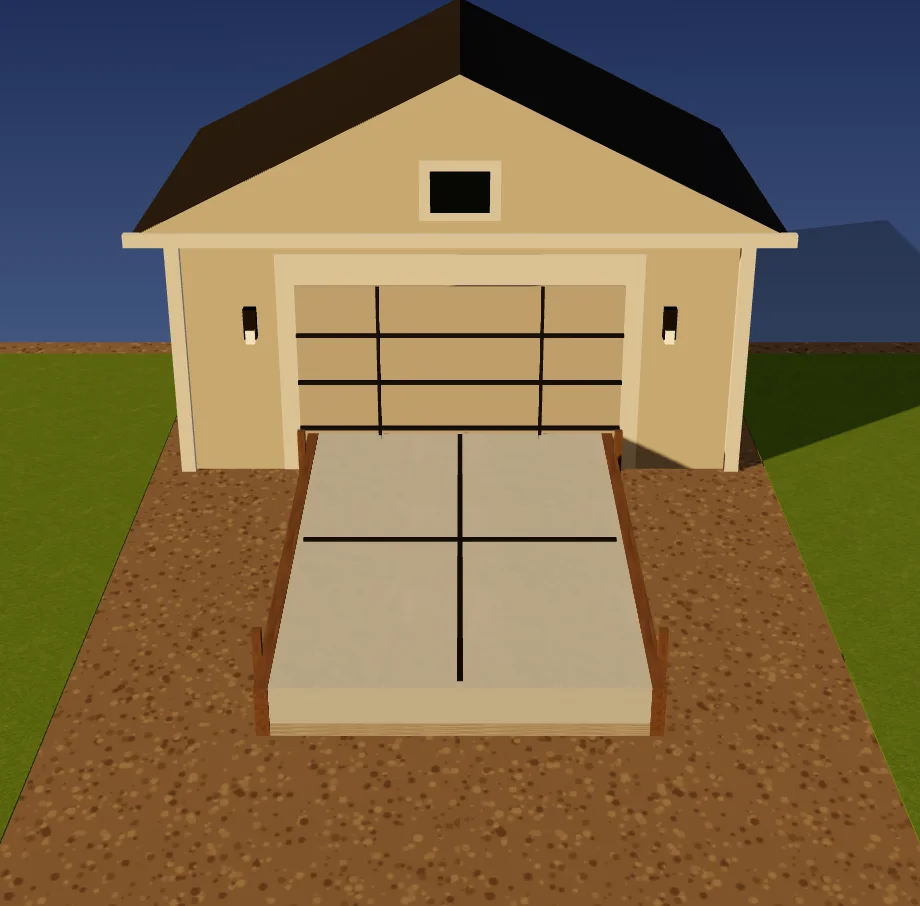
Drag the handle to reveal the finished pour.
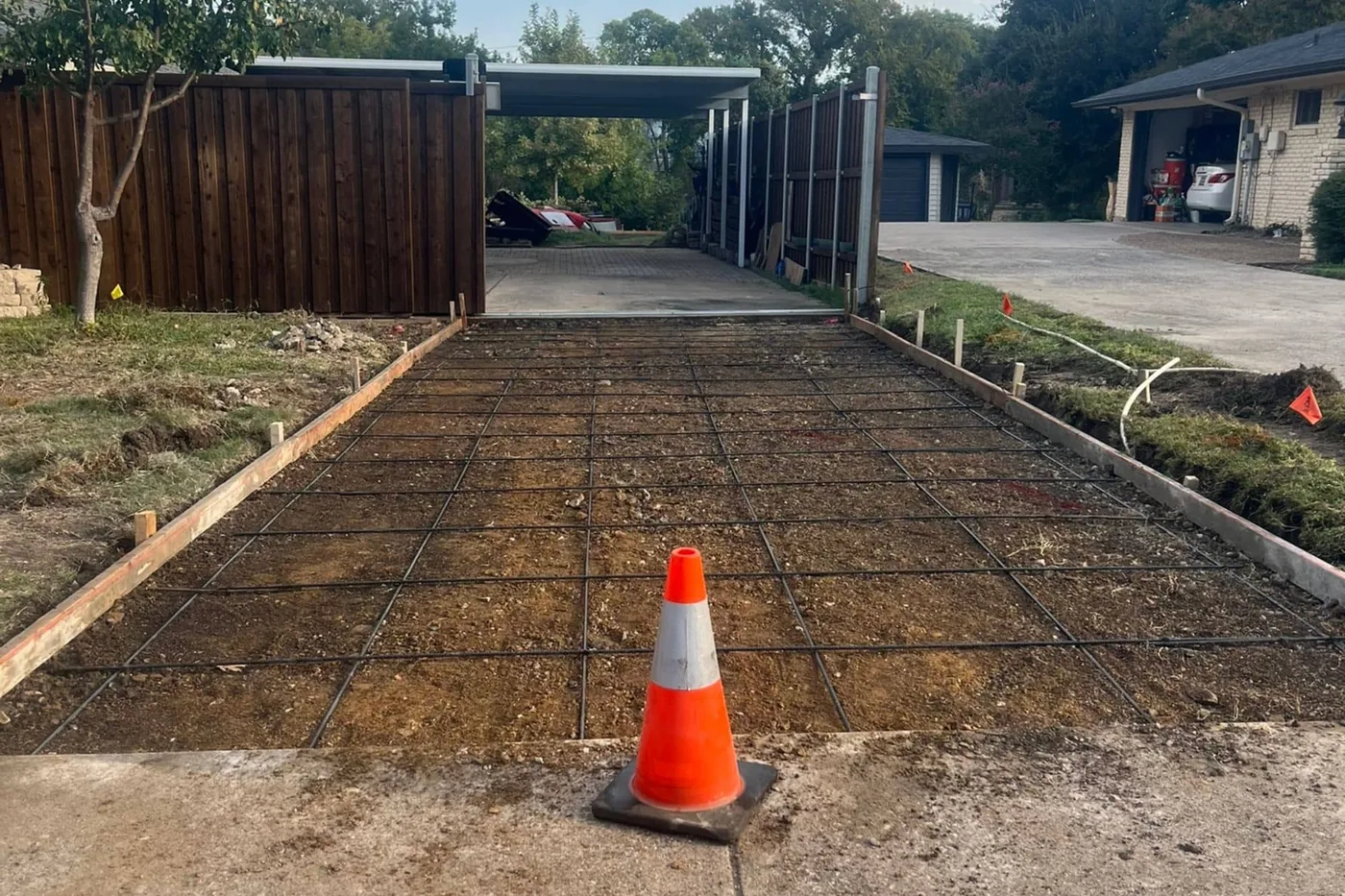
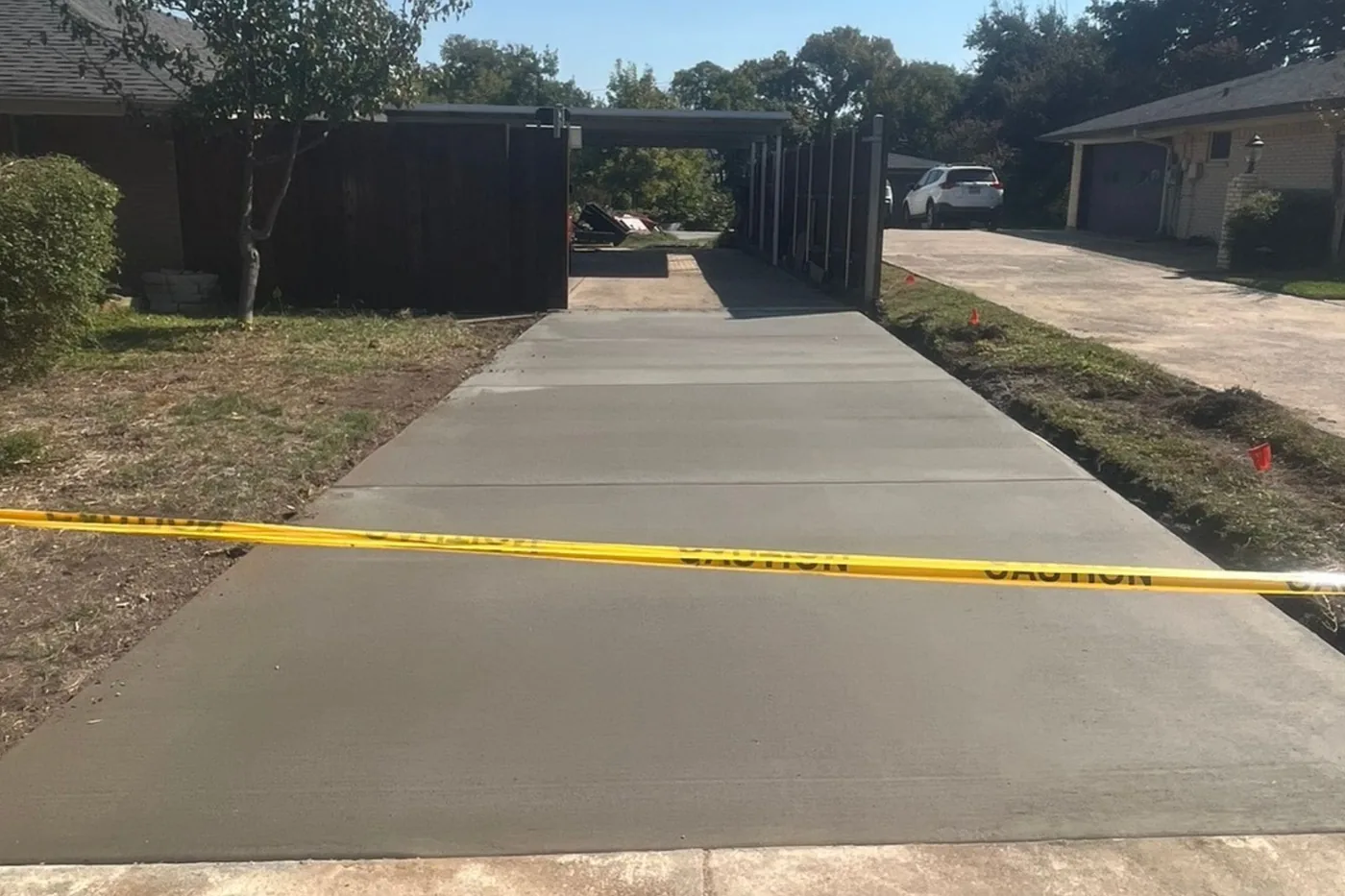
Credibility comes from how it's built, not from promises. Here's the order of operations on every concrete driveways job.
We excavate, compact, and grade a stone base over the loess and clay so the load spreads evenly. Leave that out and the soil heaves the slab up when it wets and freezes, then drops it again.
A driveway is poured heavier than a patio, with thickness matched to what parks on it, from a sedan to a loaded truck.
Steel bar is tied into a grid on chairs so the slab spreads vehicle weight and bridges the small ground movement our winters and our soil hand every driveway. Mesh or fiber alone does not do that job under this kind of load.
The air-entrained mix stands up to repeated freezing, and a deliberate run of expansion and control joints manages movement and ties cleanly into the apron and the street.
We hand you a date the slab is ready to drive on, and we tell you to skip the de-icer the first winter and reach for sand for traction while the concrete finishes curing.
Most contractors vanish after the deposit. We pick up the phone, show up when we say, and stand behind the work after the truck leaves. The follow-through is the difference.
A foreman we know runs your job and a vetted crew does the work, managed by Lucky's, one company accountable from the first call to the final walkthrough.
COI and lien waivers on file before we break ground. The documentation that lets commercial clients pay and gives homeowners peace of mind.
Prepped subgrade, reinforced and mixed to spec for the job, and proper curing. We build credibility through the process, not promises. On concrete driveways, that starts with compacted base over the soil.
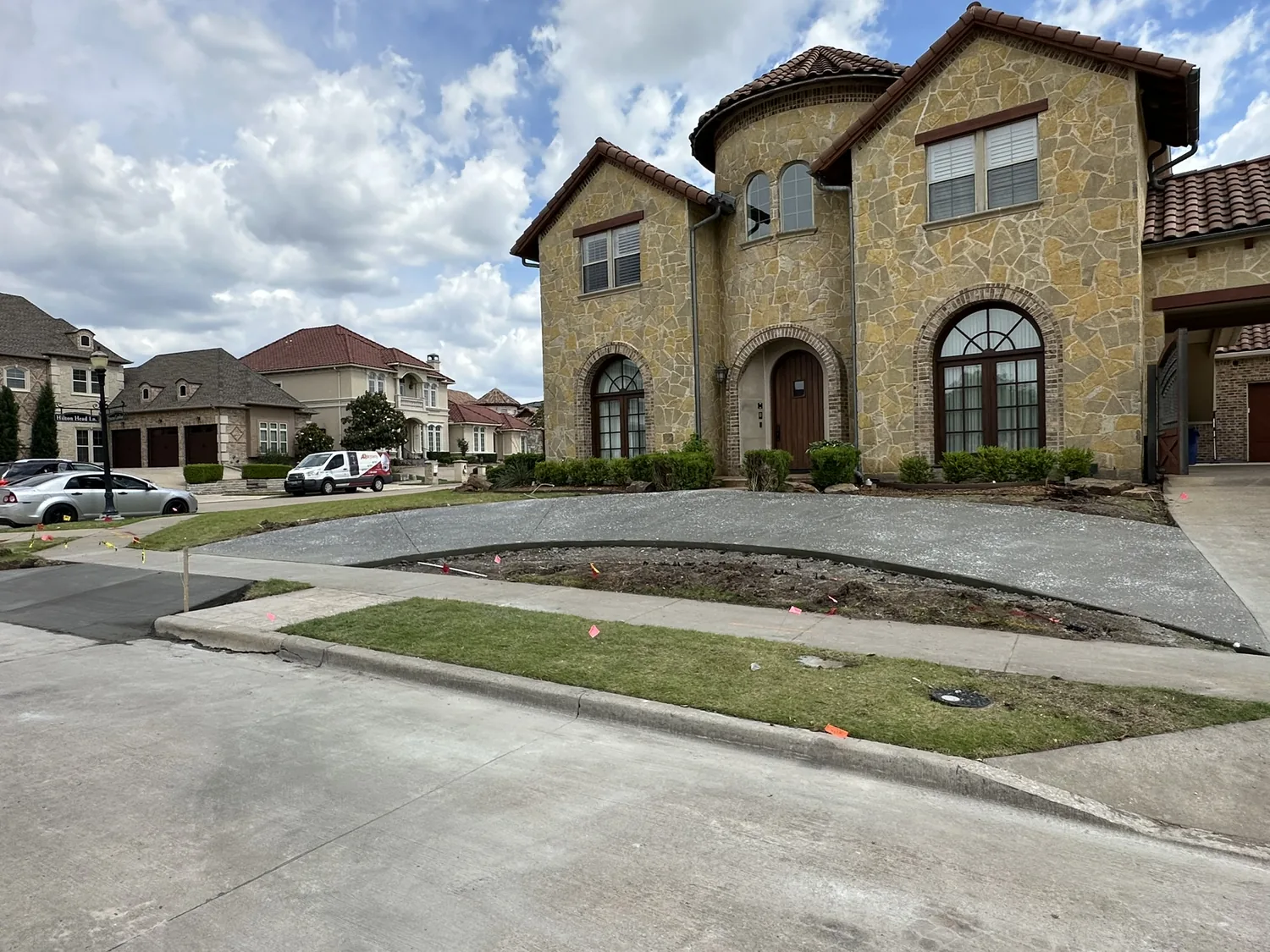
A St. Louis driveway runs above a bare flatwork quote because it is built for ground that freezes and moves: a compacted base over loess and clay, a rebar grid on chairs, an air-entrained mix, proper joints, and edges that reach frost depth. As a starting range, standard residential driveways run roughly $8 to $14 a square foot, more for decorative finishes or a heavy tear-out. The figure then follows square footage, thickness (four to six inches), finish, and any demolition. We settle it after seeing the site, never over the phone.
Two things working together: an air-entrained mix that resists freeze-thaw scaling, and a compacted base under a tied rebar grid so the slab is not heaved from below or left to split on its own. Joints give the movement a planned home. The ground moves here every winter; our job is to choose where that shows.
De-icers speed up surface scaling, and they bite hardest on fresh concrete. We pour air-entrained, seal the surface, and ask you to hold off the salt the first winter, leaning on sand for grip where you can. After that, a sealed and air-entrained slab takes the season far better.
We pour in the four to six inch range for ordinary passenger vehicles and step up for RVs or heavier trucks. The thickness follows your real use rather than a single default, and we size the base under it to the soil.
Foot traffic comes first, vehicles later, because concrete keeps gaining strength well past the point it looks done, and a cold snap stretches out those early days. You will have the drive-on dates in hand before we pour.
Yes. We break out the old slab, haul it off, and pour the new one, all under a single quote. An old driveway that has heaved or scaled usually traces to a thin base, no real steel, or a mix that never had air in it, and the rebuild corrects all three.
You'll hear back from a real person, usually the same day. No call center, no runaround, no chasing us down.
Booking up fast this season. Or call (314) 207-4707