How much does a concrete patio cost in St. Louis?
Concrete around St. Louis carries cost drivers a flat national average ignores: a rebar grid on chairs, an air-entrained mix for the winters, edge footings that reach the frost line, and base work over loess and clay. As an honest starting point, most broom-finish patios run roughly $8 to $14 a square foot, with stamped or decorative work closer to $14 to $22, before base prep. From there it tracks square footage, the finish, and how much the soil needs underneath. We quote it after walking the yard, not as a guess on the phone we cannot back up.
How thick should a concrete patio be?
A residential patio is poured four inches over a compacted stone base, which handles furniture and foot traffic, and we deepen it where something heavy like a hot tub will sit. On our loess-and-clay ground the base under those four inches matters as much as the slab.
Will St. Louis soil crack my patio?
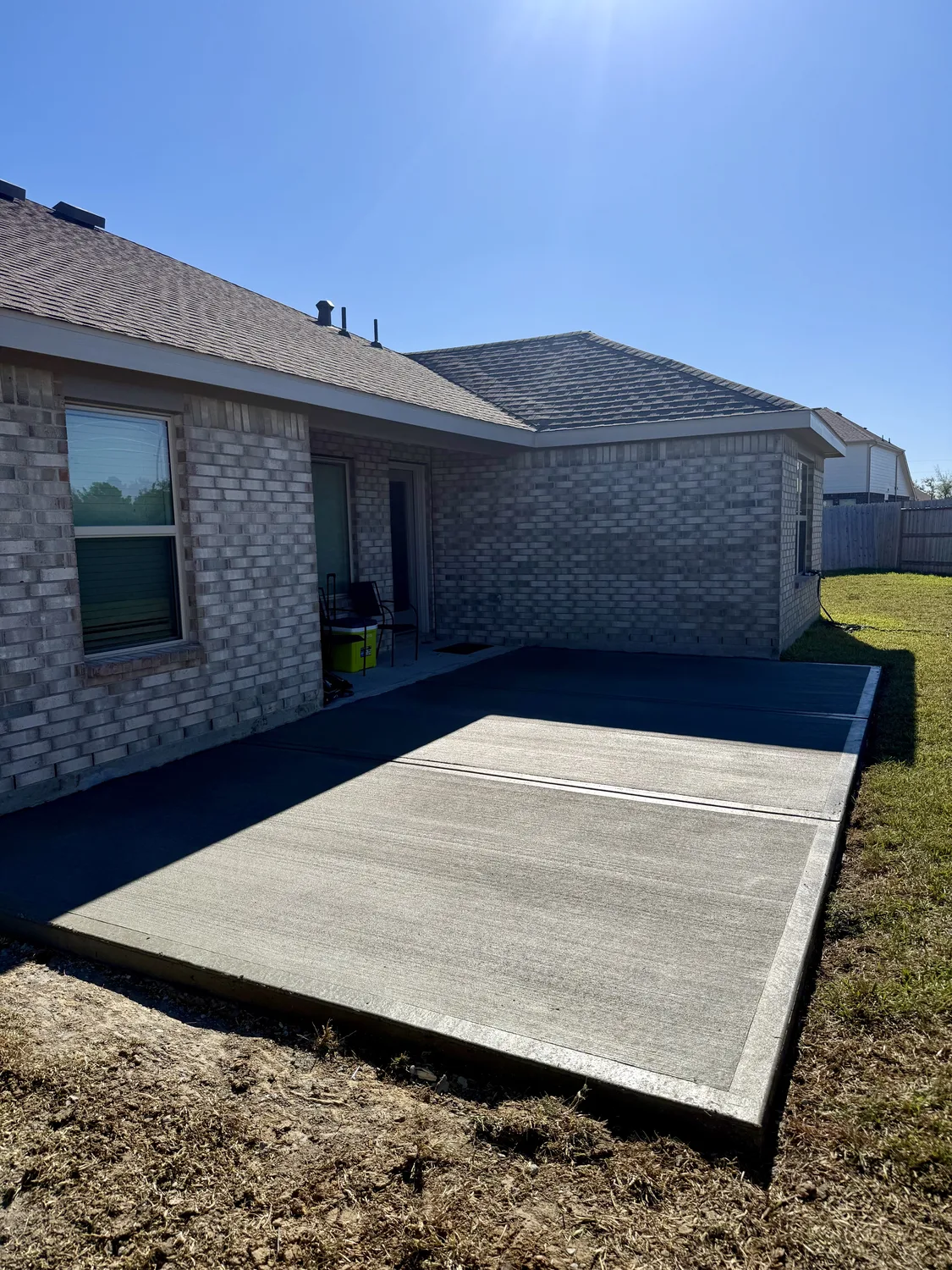
The loess over glacial clay here moves as it gains and loses moisture, and that is the usual reason a patio lifts or splits. We get ahead of it: strip the soft soil, compact a draining stone base, tie a rebar grid to hold the slab together, and saw control joints so any movement follows a line we picked. We will not claim concrete never moves, only that we decide where it shows.
Can you pour a patio in the winter here?
Concrete has to set above freezing, so deep-winter pours in Missouri are limited and need blankets and frost protection to cure safely. We will give you a straight read on whether to pour now or hold for warmer weather, and we will not lay a slab in conditions that shortchange it.
Stamped or broom finish, which should I pick?
Broom is the everyday pick: textured, sure-footed in rain and snow, and lighter on the wallet. Stamped reads like stone or brick and suits a lot of St. Louis homes, but winter ice melt and freeze-thaw are harder on the finish, so it wants resealing on a cycle. We will weigh both against how the space gets used.
Will a concrete patio drain right?
Yes. We set the pitch so rain and meltwater leave toward the yard instead of pooling on the slab or running back at the foundation. Water that sits and then freezes is what pries edges and joints apart through a Missouri winter.